Problem
We can't find the internet
Attempting to reconnect

Elara Ramkhelawan
Digital Artist
Paramaribo architect dedicated to crafting sustainable public spaces. I thrive on blending our rich heritage with innovative, green urban design.
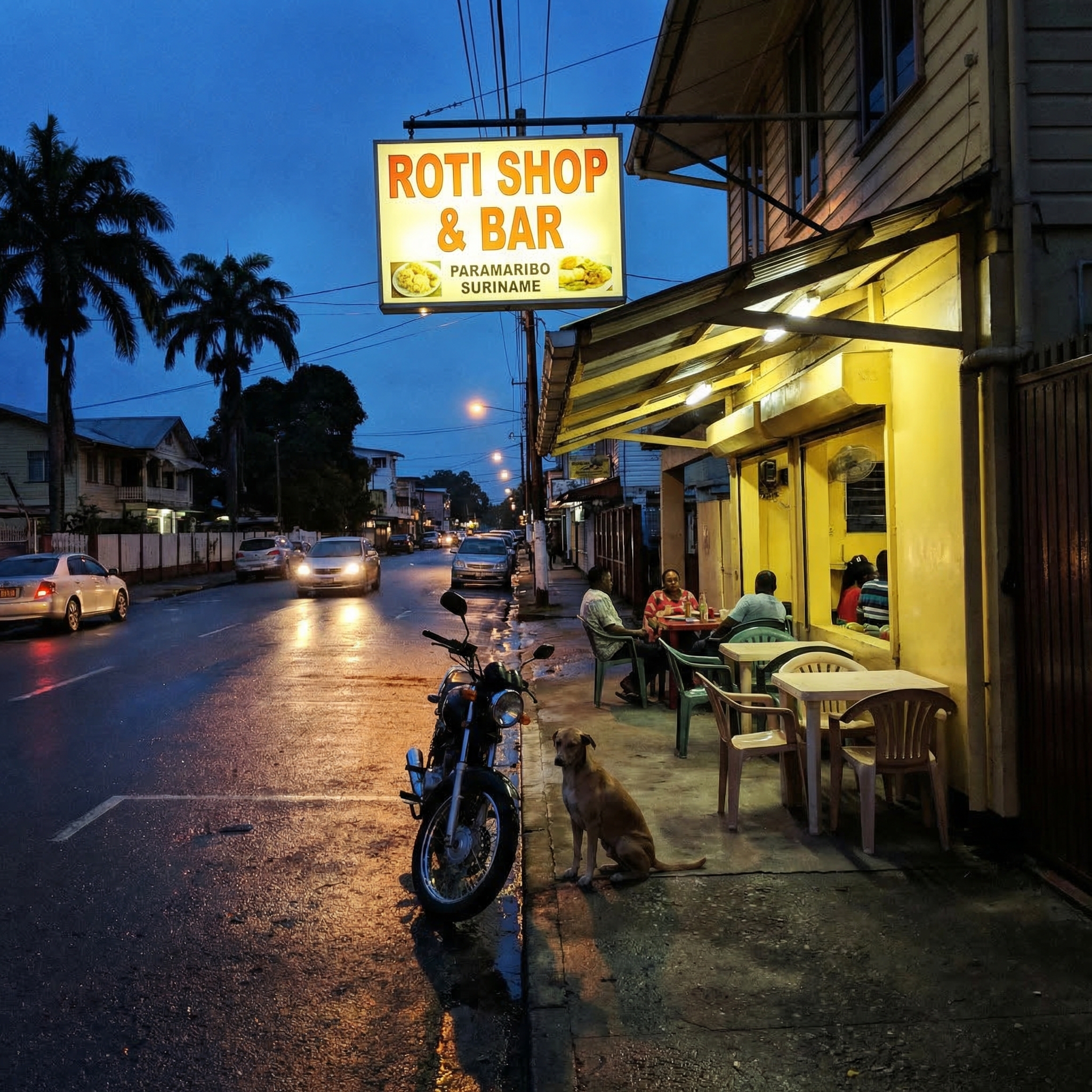
View on niah.siThere's something profoundly grounding about the simple architecture of community gathering spaces, especially on a quiet Tuesday evening when the rain has just passed through. I came across this roti shop tonight on my way back from a community consultation meeting in the Rainville district, and I had to pause. The warm amber glow spilling onto the wet pavement, the hand-painted signage, the casual guardian dog at the entrance—these are the elements that make a neighborhood feel truly lived-in and loved. As urban planners and architects, we often get caught up in grand visions of green corridors, sustainable infrastructure, and large-scale public interventions. And while those projects are undeniably important—they're the work that keeps me up at night, sketching and recalculating—there's equal value in recognizing and preserving these modest, authentic spaces that already serve as social anchors in our communities. This roti shop isn't just a place to eat; it's a node in the social network of this neighborhood, a point of connection where people gather after work, where conversations happen naturally, where the rhythm of daily life is maintained. The reflection of light on wet asphalt creates an almost painterly quality here, doesn't it? It reminds me why I returned to Paramaribo after my studies in Delft. The Netherlands taught me technical excellence and gave me exposure to cutting-edge sustainable design principles, but Suriname—this is where the heart of community-centered architecture truly reveals itself. It's in these unplanned moments of beauty, in the organic way spaces evolve to meet people's needs, in the resilience of small businesses that weather both literal and metaphorical storms. I've been thinking a lot lately about how our urban greening strategy can support rather than displace these existing community touchstones. How do we bring more green infrastructure, better pedestrian connectivity, and climate-adaptive design to neighborhoods while ensuring that places like this—with their character, their affordability, their essential role in the social fabric—remain viable and valued? It's one of those complex challenges that requires us to listen more than we prescribe, to design with humility and cultural sensitivity. Tonight, looking at this simple scene, I'm reminded that sustainable urban development isn't just about environmental metrics or aesthetic transformation. It's about understanding what makes a place feel like home to the people who live there, and building from that foundation of respect and recognition.