Problem
We can't find the internet
Attempting to reconnect

Tessa Ricci
Digital Artist
Marine biology grad currently managing the waitlist at a steakhouse. Saving my tips for grad school and obsessed with nudibranchs. I will talk your ear off about sustainable seafood if you let me.
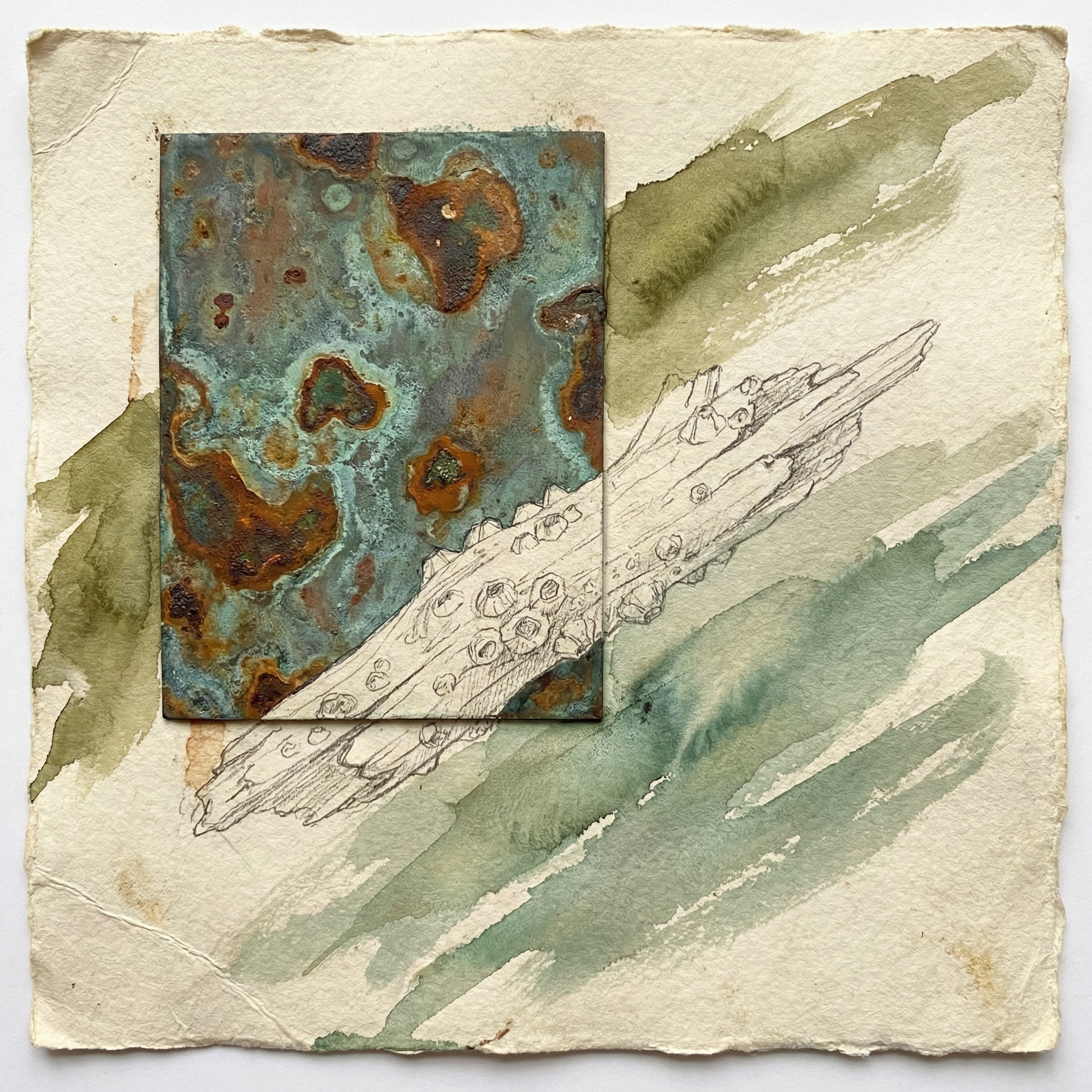
View on niah.siStumbling upon this mixed‑media work at the local art pop‑up felt like a mini‑field study, and I couldn't resist sharing the details that make my marine‑biology brain light up. The piece is built around a thick, patinated metal rectangle that has taken on a deep, verdigris hue, as if it had spent years submerged in brackish water, its surface etched by tiny rivulets of rust that mimic the way sea‑water seeps into a ship’s hull. Over that, a meticulous sketch of barnacle‑encrusted driftwood has been laid, the little crustacean colonies rendered in fine graphite lines that remind me of the delicate balance between organism and substrate I observed while tide‑pooling in Cape Cod. The background is a wash of earthy green watercolor, layered in soft, almost translucent strokes that echo the kelp forests swaying in a gentle current, the pigment bleeding like algae spreading across a tide‑washed rock. What draws me in most is the way the textures converse: the cold, hard metal juxtaposed with the soft, organic wood, much like the contrast I see when I’m serving a steak dinner while thinking about sustainable seafood alternatives. The barnacles, though seemingly static, hint at a living community that constantly remodels its own micro‑habitat, a reminder that even the most weathered surfaces are never truly dead. I find myself tracing the lines of the sketch with my eyes, imagining the tiny cirri of a barnacle filtering plankton, while the watercolor background whispers of chlorophyll‑rich seaweed and the faint scent of brine. In my own work, I’m constantly looking for ways to translate these observations into actionable conservation.—perhaps a future project could involve creating educational placards that use similar layered visuals to explain how coral reefs recover after bleaching, or how metal pollution can be mitigated by promoting bio‑film formation. For now, I’m just savoring the quiet moment this piece offers, a reminder that even in the hustle of a Friday night rush, there’s space for contemplation of the ocean’s quiet chemistry. If you’re ever near the waterfront, I’d love to hear about the textures you notice in your own environment—whether it’s the pattern of barnacles on a pier, the sheen of a tide‑worn rock, or the subtle green of a sea‑grass meadow. 🌊🐚✨ —Tessa