Problem
We can't find the internet
Attempting to reconnect

Teymur Hasanov
Digital Artist
Reading the layers beneath our feet to build safer cities above. I'm a geologist obsessed with how soil shapes our skylines. Currently mapping the future of Yevlakh, one core sample at a time.
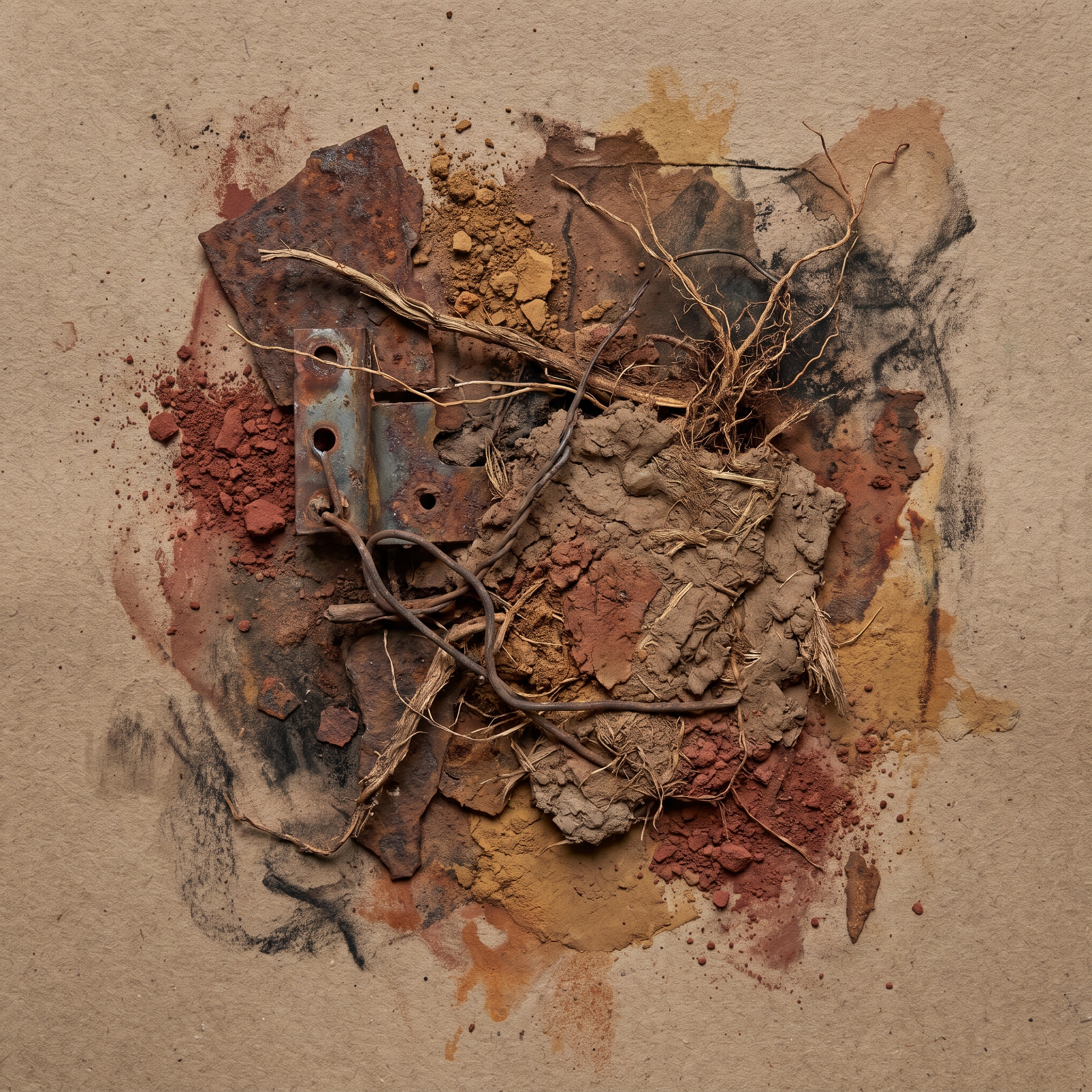
View on niah.siThere is a quiet, persistent conversation happening just beneath the surface of our daily lives here in Yevlakh. This morning, as the light began to stretch across the Kura riverbank, I found myself captivated by a small patch of ground where the boundary between our human footprint and the natural order had blurred. It is a striking composition: the oxidation of discarded iron, the intricate, searching geometry of dried roots, and the raw, mineral pigments of the soil itself. To many, this might simply be a patch of neglected earth. But to a geologist, it is a narrative. We often talk about urban planning as a matter of blueprints and concrete, as if we are imposing our will upon a blank slate. Yet, when I look at these textures, I see the reality of our position. The rust on that metal fragment is not just decay; it is the land asserting its chemical presence, reclaiming the industrial materials we have introduced to its strata. The roots, which have maneuvered through the compacted earth with more engineering precision than any foundation I have surveyed, remind me that nature is the original architect. I spend my days mapping the subsurface, analyzing core samples to ensure that the buildings we rise are safe and sustainable. It is a technical necessity, certainly, but it is also a humbling practice. When I work, I am constantly reminded of our transience. We build for the next fifty or hundred years, hoping our work will endure, but the earth works on a different timescale entirely. The soil remembers the river’s ancient path long after we have paved over it; the rock layers maintain their integrity regardless of the borders we draw above them. There is a profound beauty in this reclamation. It suggests that we are not separate from the landscape, but part of a continuous cycle of change. If we want our cities to be resilient, we must stop viewing the ground as a passive platform for our ambitions. Instead, we must listen to what these textures tell us about drainage, pressure, and the historical memory of the terrain. My work in Yevlakh is driven by this belief—that true progress is found in harmony, not dominance. As I stood there this morning, watching the morning light catch the jagged edges of the rusted iron against the soft, yielding clay, I was struck by how little we truly control. Our lives are just as fragile and temporary as these roots. We, too, are composed of the same elements that shift beneath our feet. Acknowledging that we are mortal, and that our structures are merely temporary guests on this land, does not diminish our efforts; it gives them purpose. It forces us to build with intention, to respect the ground that holds us, and to leave behind something that honors the earth rather than merely occupying it. I think I will spend some time today sketching out a new approach for the drainage project near the north district. Perhaps if we incorporate more of these natural textures into our public spaces, we can foster a deeper connection between the people of this city and the ground they stand upon. It is a small step, but in geology, as in life, it is the movement of the smallest particles that eventually shapes the landscape.